A neural network that solves the variable coefficient Poisson equation.
cd poisson-ddm/
conda env create -f psn.yml
conda activate psnpython generate_Poisson_data.py -f ../data/train -n 20000
Generates a hdf5 dataset with 20.000 samples. One sample consists of 32x32 grids for components a (coefficient), f (right-hand side), g (boundary condition), and p (solution) of the variable coefficient Poisson equation:
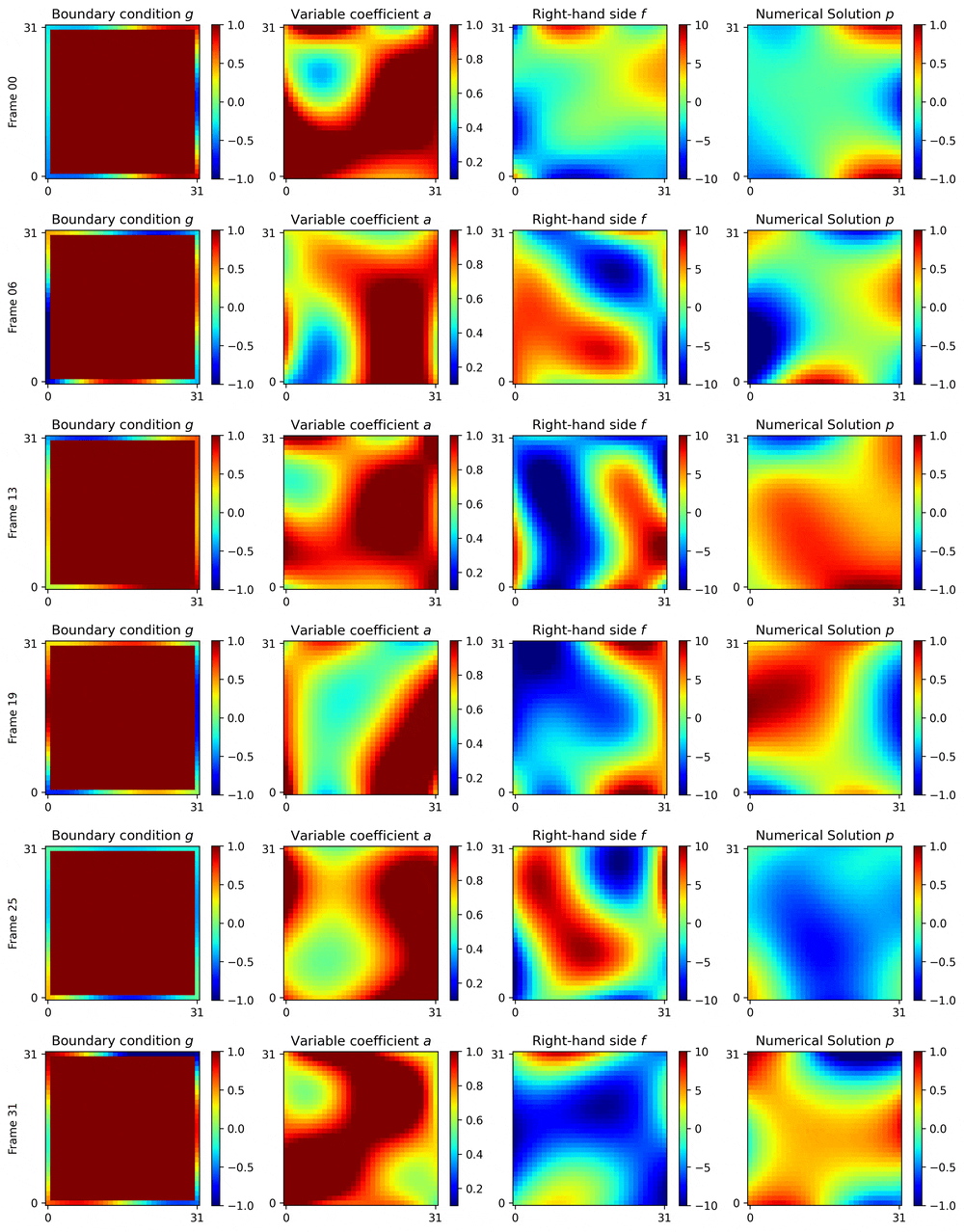
python gfnet.py -n 20000 -e 500 -f ../data/train_32_20000.h5 -b 64 -eq 2 -l 2
Trains the inhomogeneous Poisson equation with 20.000 samples (90/10 train/valid split) for 500 epochs with a batchsize of 64 samples.
Alternatively, the Laplace (f=0) or the Poisson equation with zero-BC (bc=0) can be trained with options -eq 1 and -eq 0.
The total loss consists of data (along domain boundaries only) and physics loss (entire domain).
Hyperparameter alpha is tunable, e.g. -a 0.01.
python generate_Poisson_data.py -f ../data/test -n 100
Generates a new dataset to test on. Option -p generates a smooth dataset with additional (also previously unseen) samples between randomly generated Poisson instances.
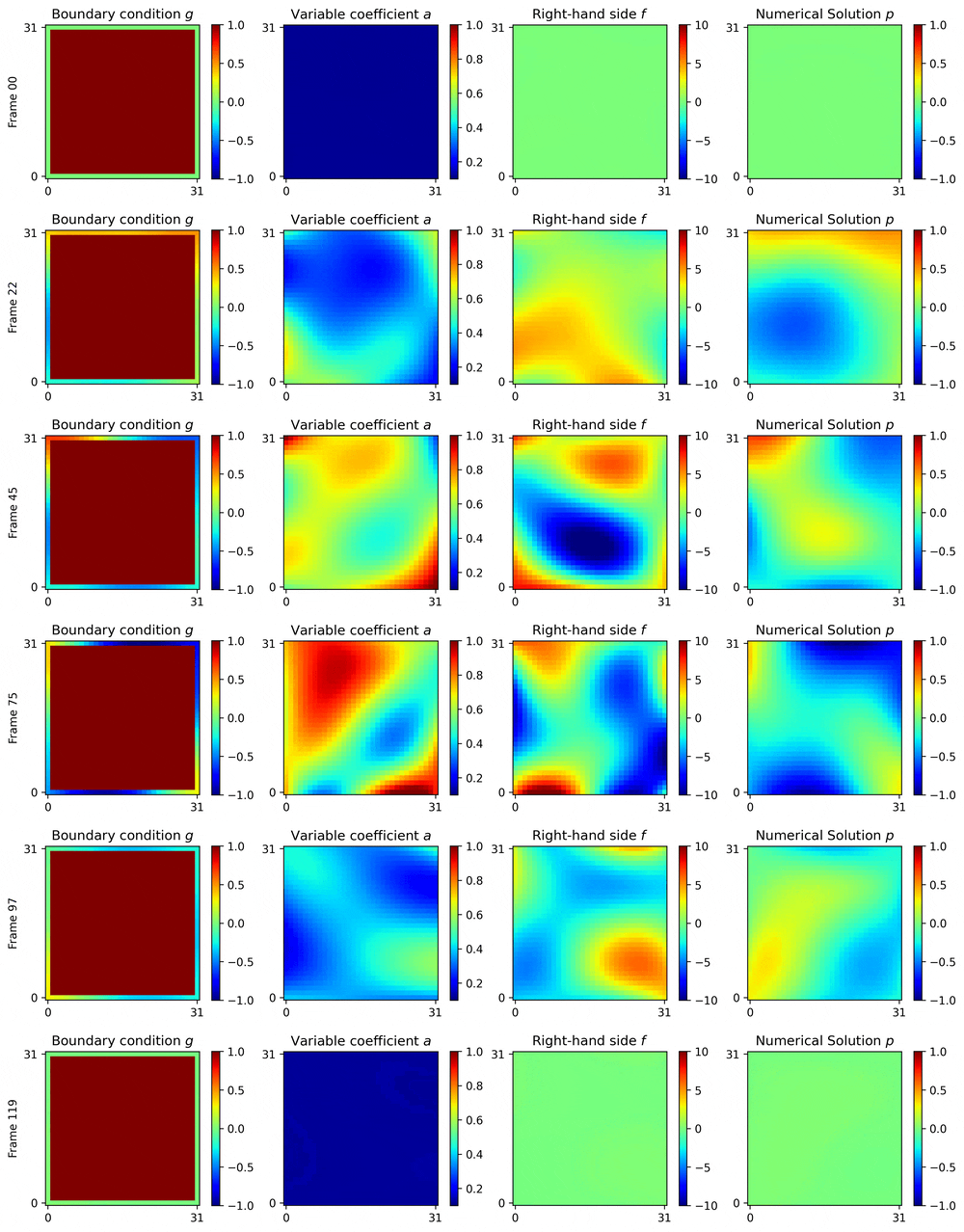
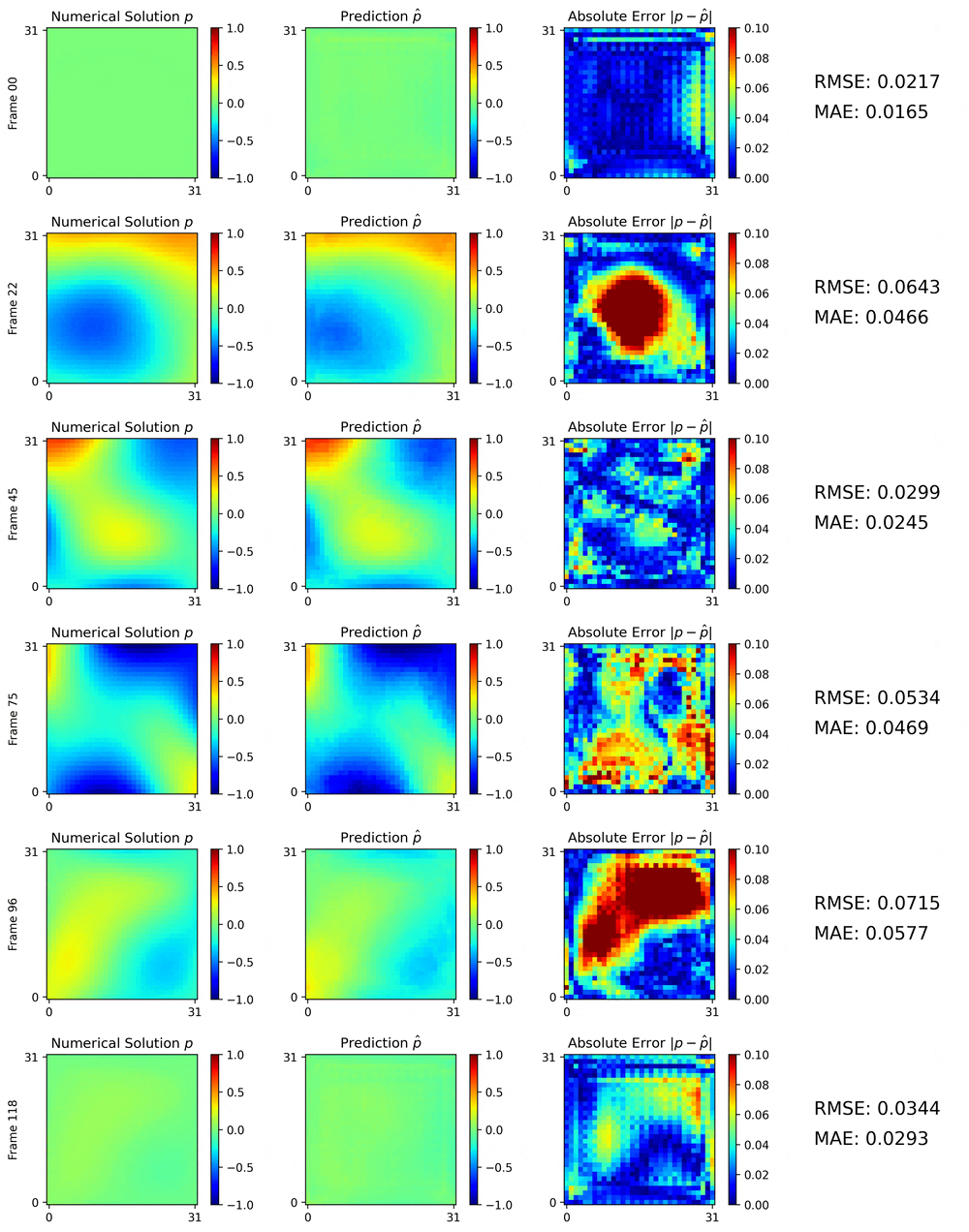
python gfnet.py -n 100 -f ../data/test_32_100.h5 -eq 2 -l 2 -t 0 -p 5
Predicts the first 5 frames (-p 5) from the dataset, plots results and saves them in ../img/.
Calling gfnet with option -t 0 disables the training step and restores the model that was trained previously.
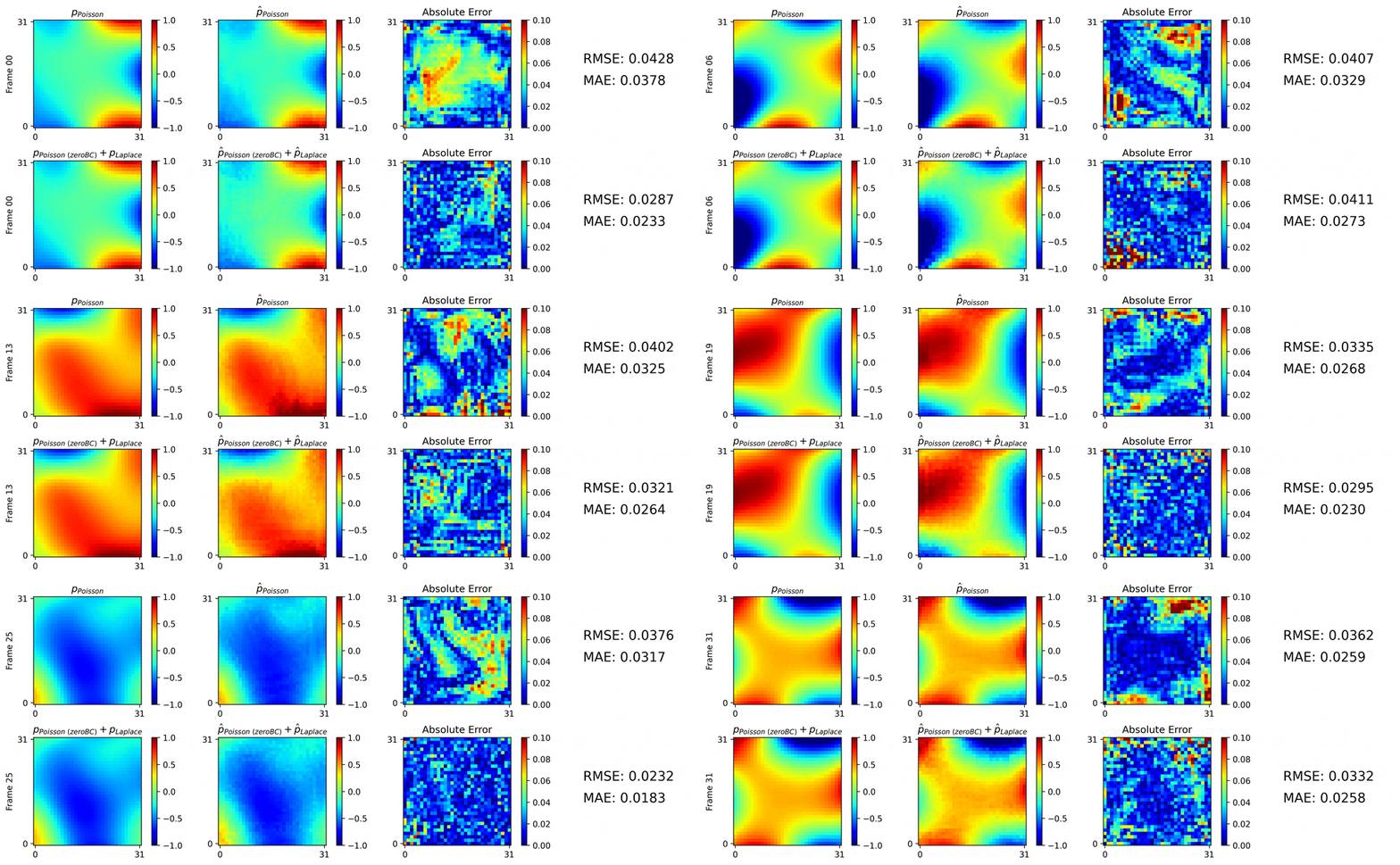
python gfnet.py -n 20000 -e 500 -f ../data/train_32_20000.h5 -b 64 -eq 0 -l 2
python gfnet.py -n 20000 -e 500 -f ../data/train_32_20000.h5 -b 64 -eq 1 -l 2
Separating the inhomogeneous Poisson equation into models for the Poisson zero-BC and Laplace equation and summing their predictions improves RMSE and MAE.
gfnet.py contains 3 U-Net implementations that can be loaded with option -l.
- Simplified U-Net (
-l 0) - Full U-Net with Dropout (
-l 1) - Full U-Net with Batch Normalization (
-l 2)
python Poisson_benchmark.py -f ../data/test_32_100.h5 -n 100 -b 2
Solves n instances from the test dataset numerically and logs times for all equations. Default solving backend is pyamgx (GPU). Alternatively, solving Poisson with the CPU is possible with pyamg (-b 1) or scipy (-b 0).
This utility script can be used to compare the inference time (performance / speed) of the models against a state-of-the-art numerical solver.